The Effect

You ask a spectator to silently sing the alphabet song in their head and stop on any letter that feels right. Nothing is spoken, nothing is written, their lips never move. From that letter they think of a zoo animal. You then reveal, in stages, the shape of their thought, the number of letters in the word, and finally the animal itself.

There is nothing to carry and nothing to reset. The method lives entirely in timing, scripting, and a little nerve.


Part One: The Full Performance Script

What follows is the routine exactly as I perform it, with no interruptions. Read it out loud once before you study the workings. The rhythm matters more than the words.

“Do you remember when we were kids and we all learned the alphabet in the same slightly hypnotic way? Not by reading it. Not really. We learned it as a song.

And the strange thing is, even now, years later, you don’t have to sing it out loud. You can hear it in your head.

In fact, if I say A, B, C…

…your brain almost wants to carry on without permission.

I want to try something with that automatic part of your mind. Not memory exactly. More like momentum.

In a moment, I’ll snap my fingers. When I do, I want you to start the alphabet song silently in your mind.

Don’t say anything out loud. Don’t move your lips. Just hear it internally, exactly the way you heard it as a child.

And as it moves along, I want you to stop somewhere. Not at the beginning, not at the obvious place, just somewhere that feels like you caught the song mid-stream.

You don’t need to know why you stopped there. Just stop.”

Snap your fingers. Wait.

“Good. You have one letter now?”

Wait for a nod.

“Don’t change it. The moment you change it, it becomes a choice. I want the first one. The one that just happened.

See that letter printed clearly in your mind. Big, simple, black letters on a white background.

Now take that letter and let it become the beginning of something alive.

I want you to think of the first zoo animal you can imagine whose name starts with that letter.

Not the cleverest one. Not the rarest one. The first one your mind gives you.

Have you got one?”

Wait for a nod.

“Good. Don’t tell me. Don’t even react too much. Just keep it in your mind.

See it now. Not as a word yet. As the animal itself.

Imagine the size of it. The shape. The way it moves.

If it has fur, feathers, skin, stripes, teeth, a long neck, a tail, whatever it is, just notice the thing that makes it unmistakable.

Perfect.

Now let the image fade slightly and see the word written underneath it, like a label at a zoo.

See the letters. Count them silently. Don’t tell me the number. Just know the number.

Now do something odd. Silently say the animal’s name over and over in your mind.

Not loudly. Just internally. Like you’re trying to make the thought louder without making a sound.

Like… [best candidate], [best candidate], [best candidate].

And every time you repeat it, see the animal and the word at the same time.”

Pause. Look at them. Let the moment breathe.

“Interesting. The first thing I’m getting is not the name. It’s the shape of the thought.

You’re not thinking of this as just a word. You’re actually seeing it.

Keep repeating it.

There’s a very clear rhythm to the word.

I think there are… [number] letters.

Don’t say anything.

Think of the first letter again.

Now the whole word.

You’re thinking of a [animal].”

Stop. Let them react. Do not talk over the moment you just earned.


Part Two: The Work

Here is the same routine again, beat by beat, with the machinery exposed. The method splits into three jobs: secretly learning the letter, narrowing the thought into a category you can predict, and structuring the reveal so it feels like telepathy rather than deduction.

The Opening: Proving the Premise

“Do you remember when we were kids and we all learned the alphabet in the same slightly hypnotic way? Do you remember that song?”

The spectator acknowledges this. Everyone does.

“And the strange thing is, even now, years later, you don’t have to sing it out loud. You can hear it in your head.”

Pause here. You want them to actually hear it internally before you continue. This is not filler. You are warming up the exact mental mechanism you are about to exploit.

“In fact, if I say A, B, C, D, E, F…”

Do not sing the whole thing. Cut yourself off and let their mind complete the pattern.

“…your brain almost wants to carry on without permission.”

This usually gets a laugh or a nod. More importantly, it proves the premise to everyone watching: their mind is already doing something automatic. You have just demonstrated the method to their faces and they thanked you for it.

The Instructions: Closing the Doors

“In a moment, I’ll snap my fingers. When I do, I want you to start the alphabet song silently in your mind. I don’t want you to say anything out loud. Don’t even move your lips. Just hear it internally, exactly the way you heard it as a child.”

On the surface this is fairness. Underneath, it quietly blocks them from giving away any obvious cues, lip movement being the big one. You are about to read them anyway, just not in the way they would ever suspect, so you can afford to look scrupulous.

“And as you move along, I want you to stop somewhere. Not at the beginning, not at the obvious place, just somewhere, at a random letter, that feels right to you.”

Now the real work begins.

The Method: Riding the Rhythm

The moment you snap your fingers and they start singing in their head, you start singing the song in your head too. You are rhythmically timing the spectator.

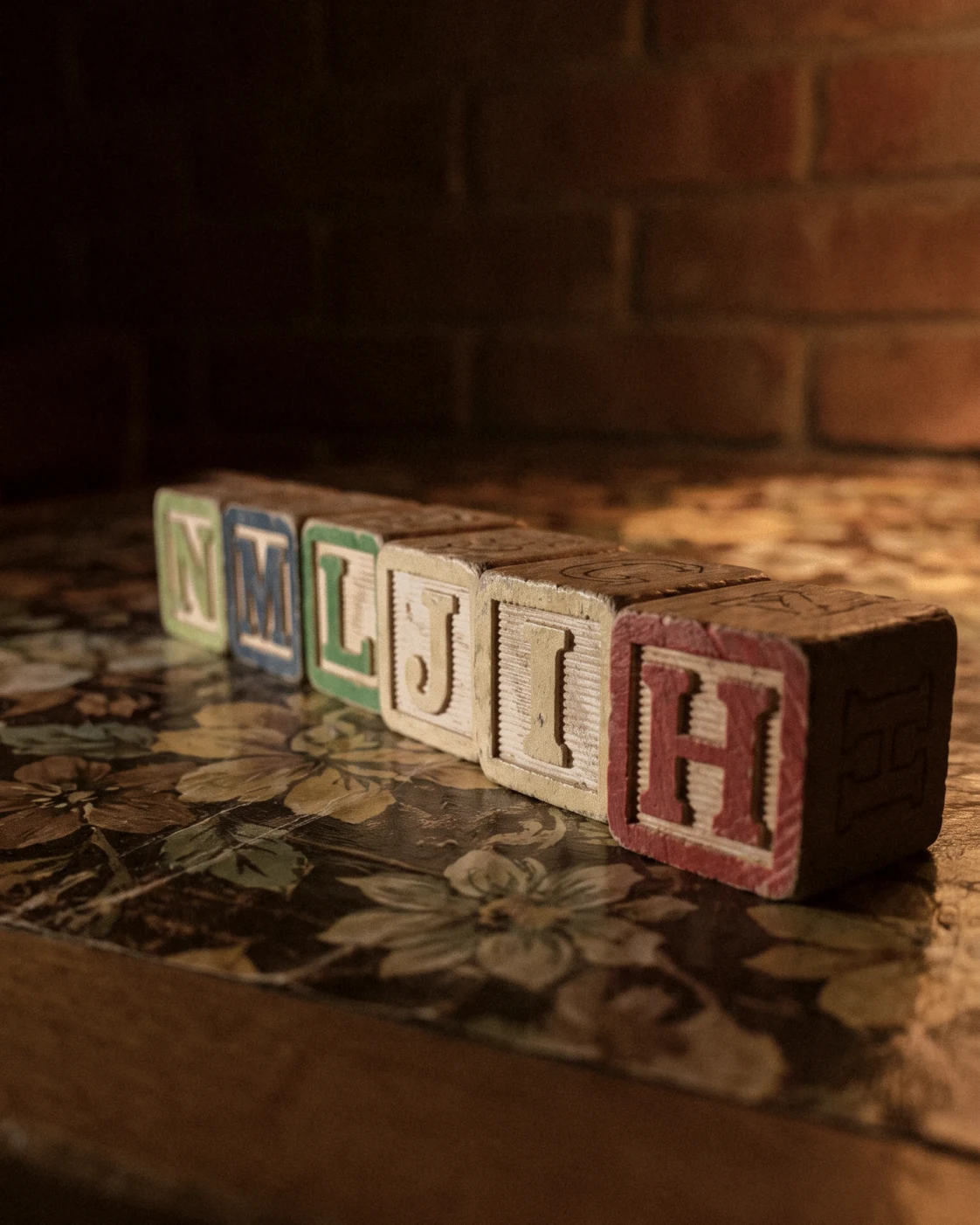
This works because the alphabet song is not a list. It is a melody with built-in phrasing, and almost everyone learned the identical version. The natural pauses fall like this:

A, B, C, D, E, F, G
[pause]
H, I, J, K, L, M, N, O, P
[pause]
Q, R, S
[pause]
T, U, V
[pause]
W, X, Y, Z

You both started on the same snap, you are both running the same tune at the same childhood tempo, so when they stop, you know roughly where the needle landed. With a little practice you will be inside one or two letters of their choice, and frequently dead on. The phrase boundaries help you enormously: people tend to stop just before or just after a pause, because that is where the song offers them an exit.

Credit where it is due. The use of the alphabet song as a predictable way of pacing a spectator’s mental process belongs to Mark Lemon and Ross Tayler. Ross laid the groundwork by developing effects around chunking information within a predictable pace, so the lineage runs through him as well.

Confirming and Anchoring

“Good. You have one letter now?”

Wait for the nod. Resist the urge to rush. This beat does double duty: it gives the audience a clean confirmation that a free choice was made, and it gives you a second to settle on your estimate of the letter.

“Don’t change it. The moment you change it, it becomes a choice. I want the first one.”

This locks them onto the letter your timing gave you. A spectator who second-guesses and hops two letters forward is the main way this method fails, so you frame changing the letter as ruining the experiment. They police themselves.

The Category: Narrowing Without Seeming To

“Now take that letter and think of a zoo animal that starts with this letter.”

The category is where you think on your feet, because it should vary depending on the letter they landed on. Zoo animals, countries, and first names are my usual three. The trick is to pick the category where their letter has one overwhelming favourite.

If your timing says they stopped on S, a common male name gets you Steve or Simon most of the time. If you call for a country, a gentle nudge toward making a quick choice tends to produce Spain. Land on P with zoo animals and you are looking at panda or penguin, and the next phase will separate those two for you. Choose the category in the moment, based on the letter you believe they are holding.

For the rest of this explanation, assume the spectator landed on P and the rhythmic pacing told you so.

“Have you got one?”

Wait for the acknowledgment. Again, no rushing.

The Letter Count

“Think of the exact amount of letters in this animal’s name.”

Here we lean on Michael Murray’s wonderful CUPS principle to gauge the approximate length of the thought. One note: you do not need the exact count. You only need to know whether the word is short, medium, or long. Panda and penguin start with the same letter, and five letters against seven gives you a strong lean toward one or the other. If the read leaves you torn, don’t worry. The thought loop just ahead will settle it for you.

Building the Thought in Layers

“See it now. Not as a word yet. As the animal itself. Imagine the size of it. The shape. The way it moves.”

This makes the thought sensory rather than verbal. A vivid thought is a stable thought, and a stable thought stays put while you work.

“If it has fur, feathers, skin, stripes, teeth, a long neck, a tail, whatever it is, just notice the thing that makes it unmistakable.”

A lovely fishing-free line. It sounds tailored and specific, yet it applies to nearly any animal alive. Later, when you reveal the thought, the audience misremembers this as you having known about the stripes or the fur all along.

“Now let the image fade slightly and see the word written underneath it, like a label at a zoo.”

Notice the framing. “See it written as a word” is an instruction; “see the label at the zoo” is a picture. You have justified turning the animal into text without it feeling like a procedure.

“See the letters. Count them silently. Don’t tell me the number. Just know the number.”

The spectator is now holding three private layers: the letter, the animal, and the number of letters. Three layers means three reveals, and three reveals means the climax lands as a sequence of impossibilities rather than a single guess.

The Thought Loop

“Now do something odd. Silently say the animal’s name over and over in your mind. Not loudly. Just internally. Like you’re trying to make the thought louder without making a sound.”

On the surface this gives the spectator a job to do, and it frames your reading as if you are detecting mental volume. When you later pause and frown slightly, you are visibly listening. But the repetition instruction is hiding something much sharper.

The example is the method. By this point you know the letter is P and the field is down to panda or penguin. This is where you fire Jerry Sadowitz’s “Repeat It” ploy, the one Derren Brown made famous through “Smoke” in The Devil’s Picturebook. As you give the instruction, you name your strongest candidate out loud, dressed up as a throwaway example:

“Keep saying it in your head, over and over… like panda, panda, panda.”

Then watch their face. If they react, a flicker, a smile, the eyes going wide, you have your hit, and you simply conclude the routine on panda. If nothing moves, that silence tells you just as much: they are sitting on penguin, and you reveal it afterwards with complete confidence. You cannot lose. To the audience the example is filler; to you it is the question that splits the last two candidates, and they answer it without ever knowing they were asked.

Deliver the line lightly and keep your eyes on them as you say the name, not after. The reaction you are hunting for lives in the first half-second.

“And every time you repeat it, see the animal and the word at the same time.”

This keeps the thought stable and layered through the reveal.

The Read: Structuring the Reveal

Do not jump straight to the animal. The order is shape of the thought, then word structure, then the animal. Each step makes the next feel less like a guess.

“Interesting. The first thing I’m getting is not the name. It’s the shape of the thought.”

This is the safe opening, and it commits you to nothing. If your read on the word length is rock solid you can open bolder with “This doesn’t feel like a tiny animal,” but only say that when the method supports it.

“You’re not thinking of this as just a word. You’re actually seeing it.”

This will land every single time, because you told them to see it two minutes ago. They have forgotten that. To the audience it plays as a genuine hit, and the spectator’s reaction sells it.

“There’s a very clear rhythm to the word. Keep repeating it. I think there are… five letters.”

Reveal the letter count before the animal whenever you can. The count is a beautiful intermediate hit. Once you have named the number of letters in a word you supposedly know nothing about, the final revelation stops feeling like a lucky guess and starts feeling inevitable.

“Don’t say anything. Just think of the first letter again.”

Pause.

“And now the whole word.”

Pause.

“You’re thinking of a panda.”

Stop talking. Let the silence do the work. The instinct after a big reveal is to fill the air, and it is exactly the wrong instinct. The reaction belongs to them. Stand still and let it happen.


Final Thoughts

The strength of this piece is that the dirty work is finished before the spectator believes anything has started. By the time they are picturing fur and counting letters, you already know where they stopped. Everything after the snap is theatre, and the theatre is what they will describe to their friends.

Practice the song. Sit with a friend, snap your fingers, sing it silently together, and have them call out where they stopped. Within an evening you will be startled at how accurate the pacing becomes.


Credits

The alphabet song as a predictable pacing tool for a spectator’s inner process is the work of Mark Lemon and Ross Tayler. Ross’s earlier explorations into chunking information within a predictable pace seeded the whole approach. The CUPS principle used to gauge word length belongs to Michael Murray. The “Repeat It” ploy used to split the final candidates is Jerry Sadowitz’s, popularized by Derren Brown through his routine “Smoke” in The Devil’s Picturebook.